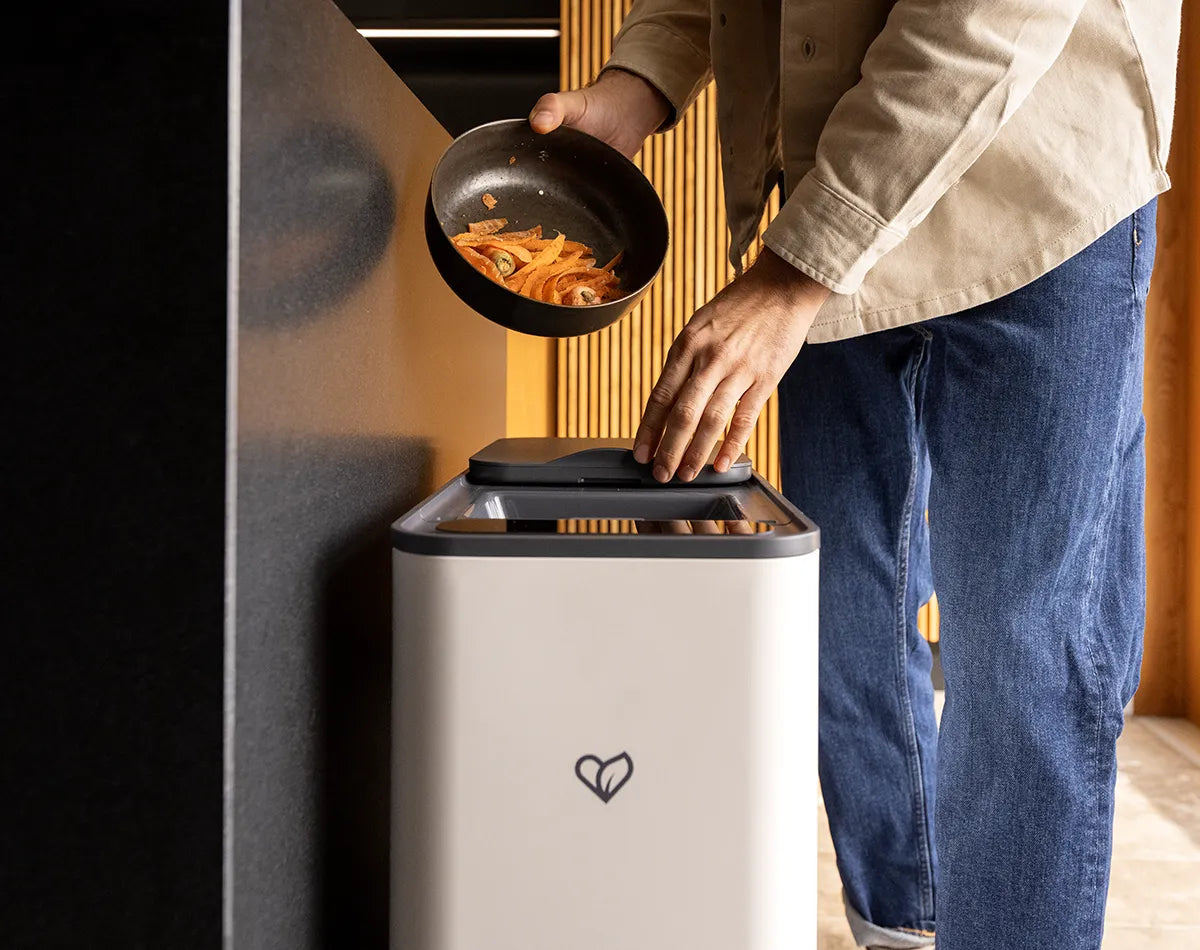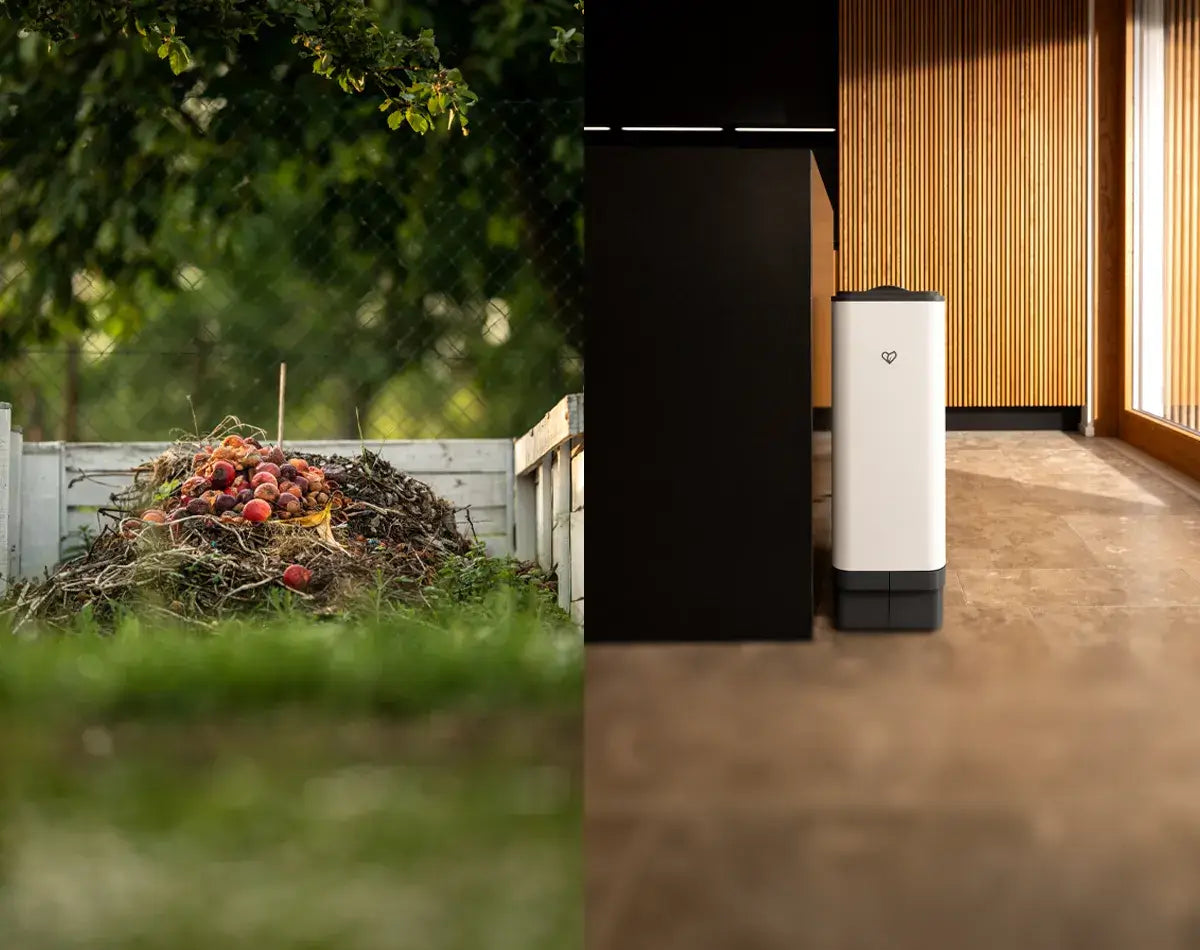



What is a kitchen composter and how does it work?
A kitchen composter is a special container (often enclosed, sometimes with an activated carbon filter) that collects kitchen waste directly at home and – depending on the system – either decomposes or prepares it until it can be used in the garden or with the next composting system.
Modern electric kitchen composters reduce waste by drying, shredding, or active decomposition – some with the help of microorganism cultures (e.g., Bokashi or hot composting). This keeps odors low, allowing you to compost directly in the kitchen.
Benefits of a Kitchen Composter
-
Space-saving and low-odor – ideal for city apartments or small kitchens.
-
Rapid utilization – you save trips to the organic waste bin and use waste efficiently.
-
Contribution to the circular economy – less waste, more valuable humus for plants.
-
Perfect for your household – modern containers are clean, often equipped with activated carbon filters.

3 Tips: How to succeed with kitchen composting
-
Opt for airtight containers or models with odor filters, e.g., activated carbon. This reduces unpleasant odors.
-
Empty the container regularly – at least once a week, depending on usage – to avoid odors and flies.
-
With compost containers that separate liquid, you can make "compost tea" for plants – especially practical with Bokashi systems
DIY Version: Build your own kitchen composter
If you don't want to use active systems, you can also easily build your own indoor container:
-
Use a sealable container.
-
Drill a few holes (for ventilation) or use a fine sieve.
-
Cover kitchen waste with shredded paper or a layer of compost for odor control – and you're done!
Soilkind – Your fully automatic kitchen composter
For those who want maximum convenience: The soilkind kitchen composter transforms almost all organic kitchen waste into fresh compost in just 48 hours – completely without a compost pile and entirely indoors. Thanks to its patented two-chamber system, it efficiently mimics decomposition.
This not only saves you trips outside but also produces hygienic, fresh compost – perfect for balcony gardeners, plant lovers and families.
FAQ – Frequently Asked Questions about Kitchen Composters
1. What can go into the kitchen composter?
Preferably use organic scraps such as fruit and vegetable waste or coffee grounds. Meat, fish scraps, or dairy products can promote odors and disrupt the process.
2. How do I keep the composter odor-free?
Activate odor filters (e.g., activated carbon), empty the container regularly, and combine organic waste with paper or cardboard for moisture and odor control.
3. How does kitchen composting close the loop at home?
Organic kitchen waste is transformed into a nutrient-rich soil amendment. Instead of ending up in the organic waste bin, the nutrients go directly back to your plants. This is a circular economy without detours: your waste today is the power for your plants tomorrow.
Compost: small quantity, big impact
A kitchen composter – whether homemade or automated like soilkind – facilitates kitchen composting and makes action suitable for everyday life. This way, you not only have less waste but also obtain valuable humus for your plants – and all without effort.